

What is a “good education”?
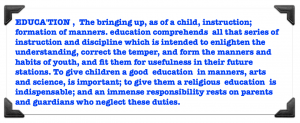
“To give children a good education in manners, arts and science, is important…” ~ Noah Webster, 1828 Dictionary
We all want a good education for our children. The Federal Department of Education established in 1979 under President Jimmy Carter’s leadership promised to give America this. But after 46 years of steadily declining rankings with other nations, we have been relieved of this $80,000,000,000.00 a year, colossal failure (except for succeeding in lining the Deep State’s pockets and forcing their agendas on the We the People.)
So how do We the People give our children “a good education in manners, arts and science”?
Let’s define a few of these words from the 1828 to clarify our mission:
MAN’NERS, noun plural Deportment; carriage; behavior; conduct; course of life; in a moral sense.
Evil communications corrupt good manners 1 Corinthians 15:33.
1. Ceremonious behavior; civility; decent and respectful deportment.
Shall we, in our applications to the great God, take that to be religion, which the common reason of mankind will not allow to be manners?
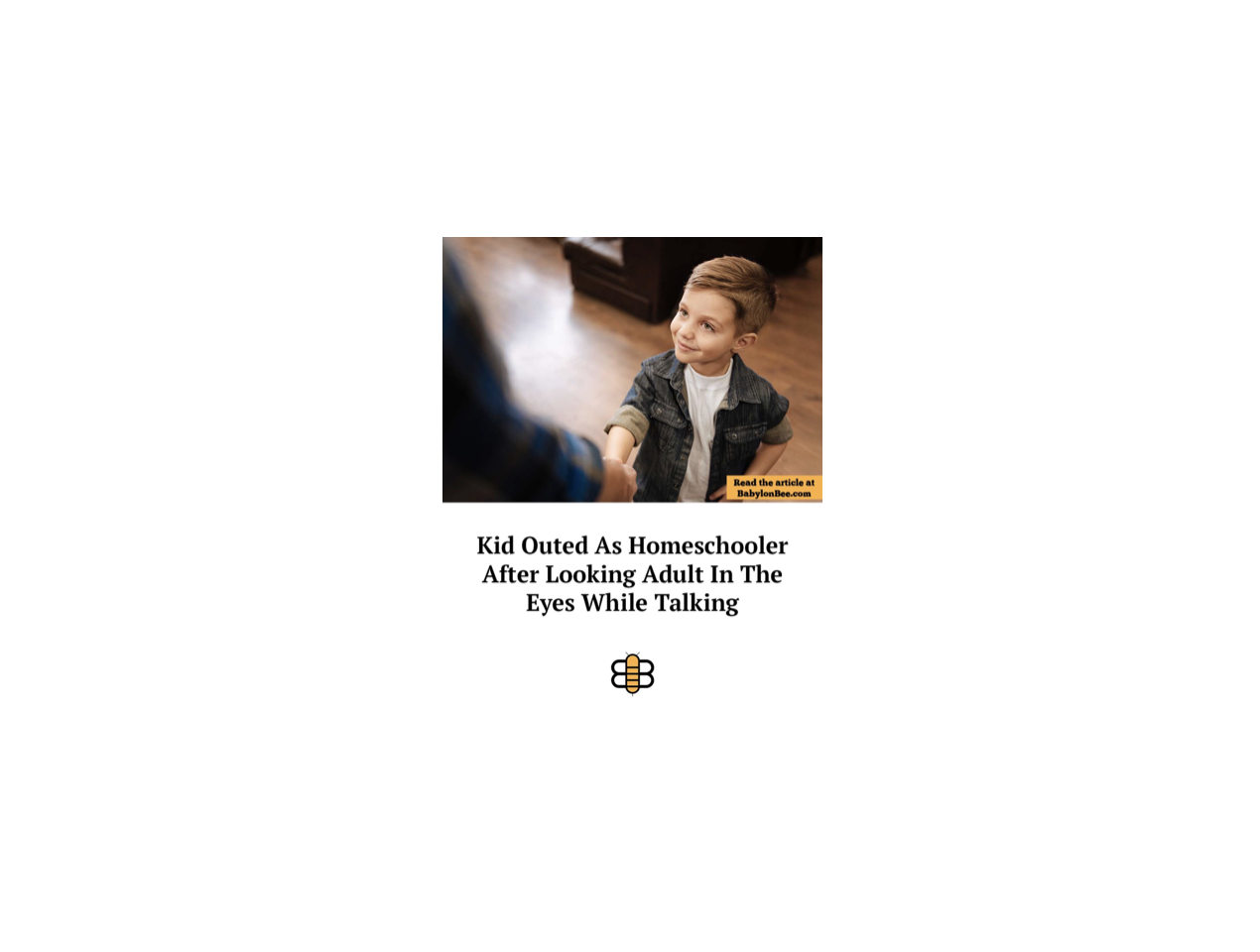
So we want our children to carry themselves in a civil, decent, respectful way, much like the young man in the picture above, able to look an adult in the eye and shake his hand. I love using older resources as they always talk about “applications to the great God”! How can we DO the Word, for His glory? How might we be allowing evil communications to corrupt the good manners we want our children to exemplify. (Father, we pause to ask You how to do this, each in our own lives right now…)
ART, noun [Latin ars, artis.]
1. The disposition or modification of things by human skill, to answer the purpose intended. In this sense art stands opposed to nature.
2. A system of rules, serving to facilitate the performance of certain actions; opposed to science, or to speculative principles; as the art of building or engraving. Arts are divided into useful or mechanic, and liberal or polite. The mechanic arts are those in which the hands and body are more concerned than the mind; as in making clothes, and utensils. These art are called trades. The liberal or polite arts are those in which the mind or imagination is chiefly concerned; as poetry, music and painting.
In America, literature and the elegant arts must grow up side by side with the coarser plants of daily necessity.
3. Skill, dexterity, or the power of performing certain actions, acquired by experience, study or observation; as, a man has the art of managing his business to advantage.
Let’s look at Science now too, so that we can compare and contrast them to each other and to how these concepts influence how we educate.
SCI’ENCE, noun [Latin scientia, from scio, to know.]
1. In a general sense, knowledge, or certain knowledge; the comprehension or understanding of truth or facts by the mind. The science of God must be perfect.
2. In philosophy, a collection of the general principles or leading truths relating to any subject. Pure science as the mathematics, is built on self-evident truths; but the term science is also applied to other subjects founded on generally acknowledged truths, as metaphysics; or on experiment and observation, as chimistry [chemistry] and natural philosophy; or even to an assemblage of the general principles of an art, as the science of agriculture; the science of navigation. Arts relate to practice, as painting and sculpture.
A principle in science is a rule in art.
3. Art derived from precepts or built on principles.
Science perfects genius.
4. Any art or species of knowledge.
No science doth make known the first principles on which it buildeth.
5. One of the seven liberal branches of knowledge, viz grammar, logic, rhetoric, arithmetic, geometry, astronomy and music.
[Note – Authors have not always been careful to use the terms art and science with due discrimination and precision. Music is an art as well as a science. In general, an art is that which depends on practice or performance, and science that which depends on abstract or speculative principles. The theory of music is a science; the practice of it an art.]
Isn’t this fascinating that this is totally different from how we consider “Art” and “Science” today? I love this note at the end here. So Music has Music Theory which would be the Science of music: the principles whereby we know how to read music, the notes, the timing, the staffs- all that lays down the facts to guide us in knowing how to play our instruments. But then the Art is actually using these principles to practice and build our skill.
When you read Christians’ works who began to develop these concepts back in the 1600’s, you see the principles mentioned and the admonishment to apply them. These Biblical concepts are consistently, constantly promoted through education to all of life’s responsibilities. This is the Biblical Art of Learning.
Father, we yearn to know You more, to know Your Ways and to walk in them. We are longing for the Ancient paths. Help us to hear Your still small Voice saying, “This is the Way, walk ye in it.” Don’t let us miss You, O God! Do not pass us by. Help us to recover the Biblical Heritage that the colonists cherished enough to cross an ocean of 3000 miles into the unknown. This heritage is what convicted and encouraged our forefathers to be willing to defend themselves, just farmers and fledgling businessmen, against the most might military power on Earth at that time. And You showed up.
Visit us again, Father. We ask for the spirit of Elijah, to turn the hearts of the Fathers to their children and the hearts of the children to their fathers. O God, will You remove this curse from our land! Help us raise our little ones, the Next Generation for You and for Your glory, in Jesus’ Mighty, Glorious Name, Amen.
~~~~~~~~~~~~~~~~~~
4-3–2026 A3S2C1 Federal Court Jurisdiction
The judicial Power shall extend to all Cases… arising under this Constitution, the Laws of the United States, and Treaties made, or which shall be made, under their Authority; – to all Cases affecting Ambassadors, other public Ministers and Consuls; – to all Cases of admiralty and maritime Jurisdiction; – to Controversies to which the United States shall be a Party; – to Controversies between two or more States; – [between a State and Citizens of another State;-]* between Citizens of different States, – between Citizens of the same State claiming Lands under Grants of different States, [and between a State, or the Citizens thereof;- and foreign States, Citizens or Subjects.]* ~ A3S2C1
Hamilton said “The Constitution ought to be the standard of construction for the laws, and that wherever there is an evident opposition, the laws ought to give place to the Constitution.” (1)
Madison said “With respect to treaties, there is a peculiar propriety in the judiciary’s expounding them. These may involve us in controversies with foreign nations. It is necessary, therefore, that they should be determined in the courts of the general government.” (2)
Hamilton said, “The judiciary authority of the union ought to extend… To all [cases] which originate on the high seas, and are of admiralty or maritime jurisdiction…”(3)
Hamilton said, “Controversies between the nation and its members or citizens can only be properly referred to the national tribunals.” (4)
Hamilton said, “The power of determining causes between two States, between one State and the citizens of another, and between the citizens of different States, is perhaps not less essential to the peace of the Union… Whatever practices may have a tendency to disturb the harmony between the States are proper objects of federal superintendence and control.”(5)
Marshall said, “With respect to disputes between a state and the citizens of another state… I hope that no gentleman will think that a state will be called at the bar of the federal court… It is not rational to suppose that the sovereign power should be dragged before a court. The intent is, to enable states to recover claims of individuals residing in other states.” (6)
W. Davie said, “There is not one instance of a power given to the United States, whereby the internal policy administration of states is affected. There is no instance that can be pointed out where in the internal policy of the state can be affected by the judiciary of the United States.” (7)
Hamilton said, “As the denial or perversion of justice by the sentences of courts… is with reason classed among the just causes of war, it will follow that the federal judiciary ought to have cognizance of all causes in which the citizens of other countries are concerned.” (8)
Restore us, O God!
(1) Federalist Paper 81
(2) Elliot 3:352.
(3) Federalist Paper 80
(4) Federalist Paper 80
(5) Federalist Paper 80
(6) Elliot 3:555.
(7) Elliot 4:160.
(8) Federalist 80

Listen every Saturday to WCNO at 8:30 am EST at 89.9 FM.
I have learned many of these quotes from The Making of America by Cleon Skousen. You may purchase it here.
~~~~~~~~~~~
“It is for freedom that Christ has set us free. Stand firm, then, and do not let yourselves be burdened again by a yoke of slavery.” Galatians 5:1 NIV
© 2026 Mrs. Brenda MacMenamin, All Rights Reserved. Permission given to share pages and posts in entirety.
Sign up for the FREE weekly blog. I will be sharing bits each week about Biblical Worldview Education and Action.
Join The Teaching His Story Community with a Monthly Membership
Let’s learn together to Restore America’s Biblical Heritage.
For Only $10 per month
- Weekly lessons on Biblical Worldview Education, Economics, His Story, Self & Civil Government
- Connect with other believers in a private community
- Receive Access to Constitutional Conversations from WCNO from the beginning lesson
- Receive discounts on courses
Sign up here for $10, recurring monthly and receive access to the Teaching His Story Community Band.
Please write “THSC” in the comment box when paying. Join here!